
Pinyon-Juniper Woodlands
Knowledge to manage pinyon-juniper woodlands for fuels, wildlife habitat, and other values is growing.
Pinyon-juniper woodlands blanket the West
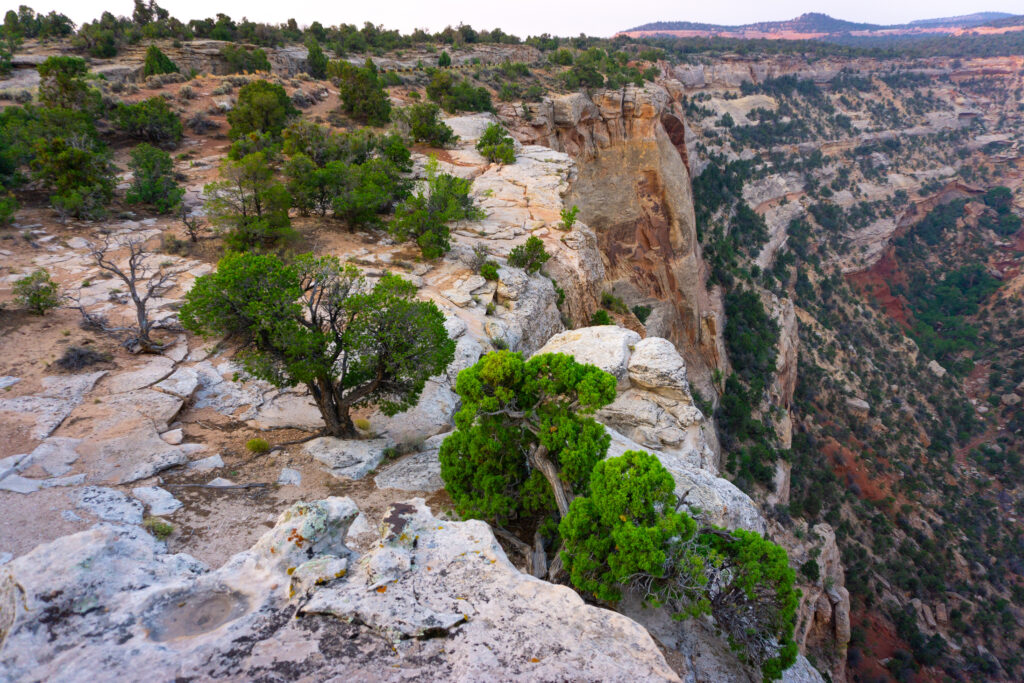
Across the Intermountain West, low mountains, foothills, and desert landscapes are blanketed by pinyon-juniper woodlands. Pinyon (Pinus edulis and Pinus monophylla) and juniper (Juniperus spp.) are the dominant species, covering over 100 million acres in total, with over 45 million acres within the IWJV boundary. Pinyon-juniper woodlands support a diverse suite of plants and wildlife species, including the Pinyon Jay. Additionally, they provide opportunities for recreation and solitude, and play a central role in cultural as well as economic drivers. Pinyon-juniper ecosystems are fundamental to the identities, ceremonies, and traditional practices of Indigenous peoples across the region, many of whom are leaders in their conservation.
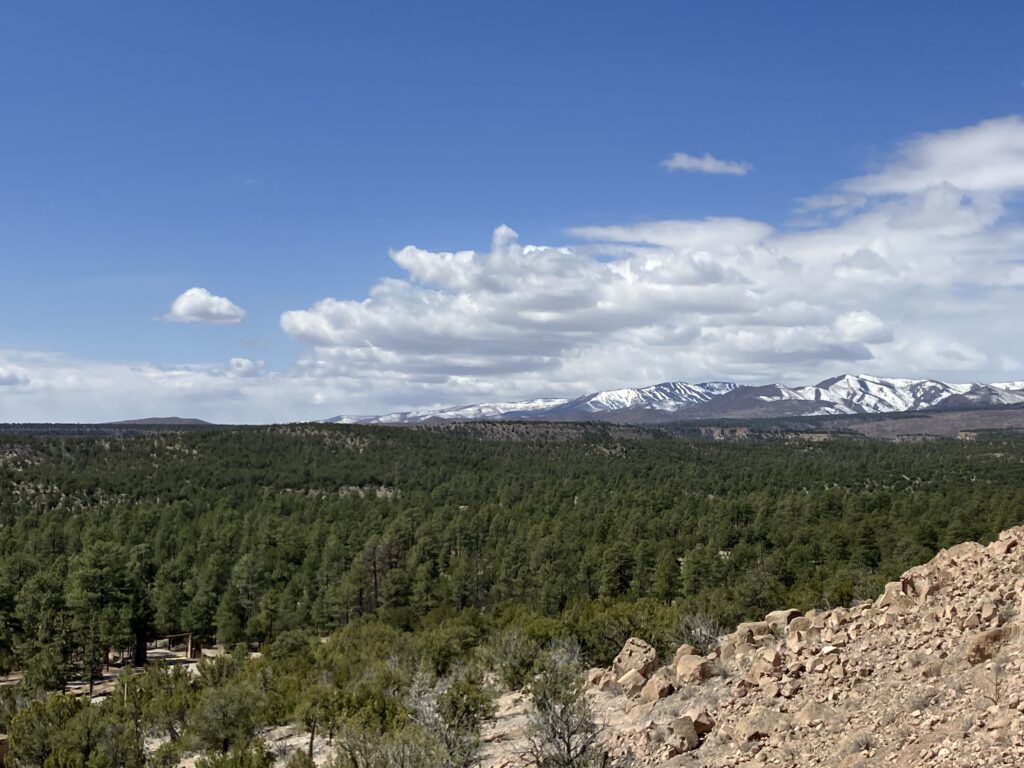
Pinyon-juniper woodlands across the Santa Clara Pueblo in northern New Mexico.
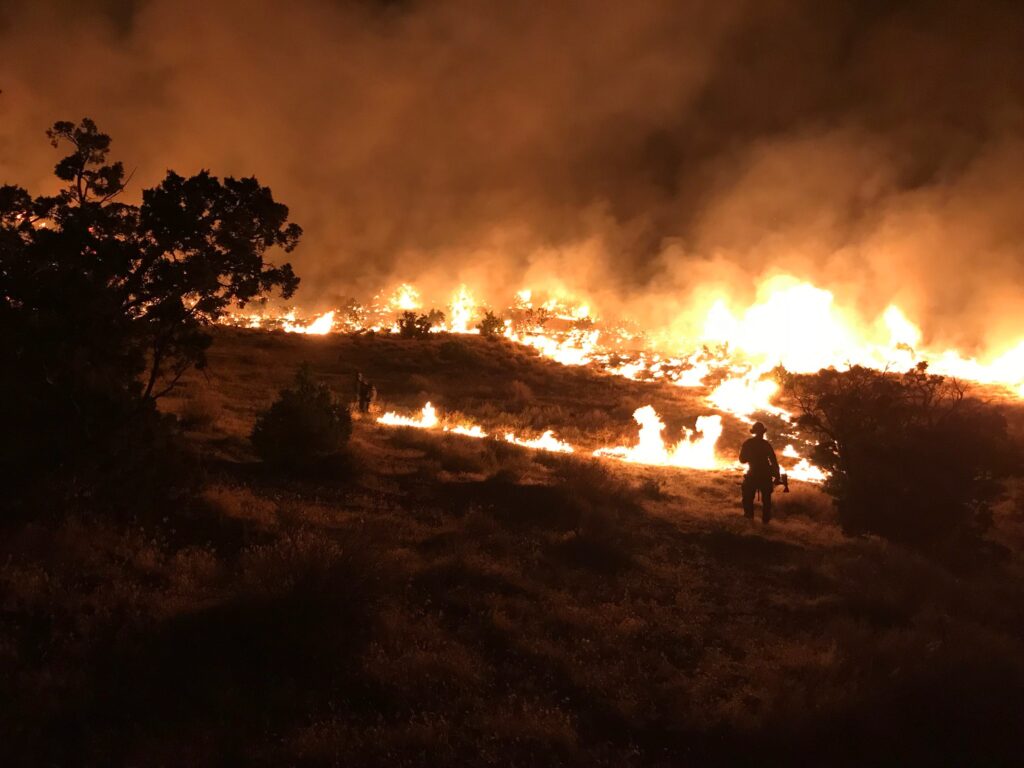
Firefighters on the Perry Fire in Nevada. Photo credit: BLM Nevada.
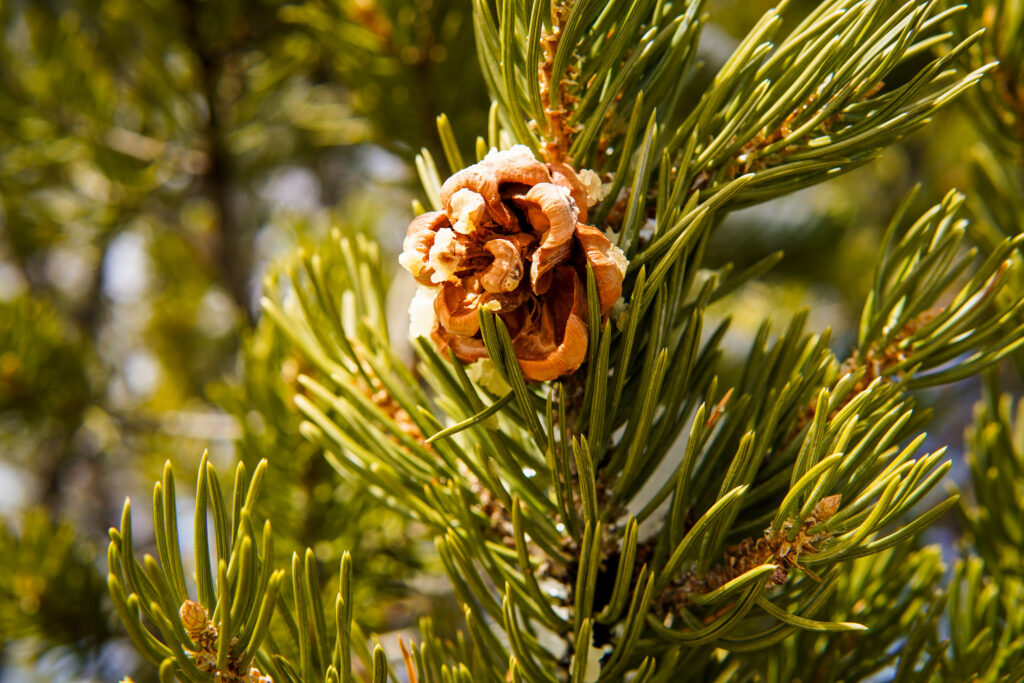
Colorado pinyon (Pinus edulis) cones are an important food source for people and pinyon jays (Gymnorhinus cyanocephalus).
Fighting fire in pinyon-juniper woodlands
In recent decades, the total area burned in pinyon-juniper woodlands has increased. Fire is a concern for this extensive ecosystem, which has many ecological and social values and is often adjacent to human communities. Although the causes of increased fire activity during this period are poorly understood, researchers believe that high tree density, invasive annual grasses, and climate change could be contributing factors.
Unlike other dry conifer forests, many pinyon-juniper woodlands were thought to have experienced high-severity fire, although infrequently and at relatively small scales. Today, however, large fires burning at high severity are most often seen in pinyon-juniper woodlands. Large and severe fires are undesirable because they pose safety concerns for firefighters and communities, and recovery is slow, especially in an era of hotter, drier climates and invasive annual grasses.
Drought, insects, and disease cause localized mortality
Drought mortality, bark beetle outbreaks, and disease dynamics also historically played a role in structuring woodlands. Presently, climate change has exacerbated these effects on some species and in some geographies, leading to localized but large mortality outbreaks. Researchers are concerned that mortality will increase in the hotter and drier parts of their ranges.
ARE Woodlands EXPANDING OR CONTRACTING?
It’s both! Across the landscape, different processes result in localized contraction and widespread expansion or infilling of pinyon-juniper woodlands. Our Western Forest Program addresses the interplay between the processes, while our Sagebrush Program addresses removing expanding conifers to benefit sagebrush ecosystems.
Can active management create resilience to fire and drought?
What can be done to protect pinyon-juniper woodlands from wildfire and drought? Recently, innovative partnerships between researchers and managers have formed to test silvicultural approaches, including thinning and pile burning, as an alternative approach that builds resilience to fire and drought in pinyon-juniper woodlands. Researchers are testing whether reducing the density of woodlands makes individual trees more resilient to the effects of drought and insects. Additionally, creating breaks in woodland canopies may help reduce the spread of crown fires.
OUR WORK IN PINYON-JUNIPER WOODLANDS
As IWJV grows our work in pinyon-juniper woodlands, we’re working with partners to fill knowledge gaps on how managers can respond to threats to pinyon-juniper woodlands and building community around innovative and collaborative approaches.
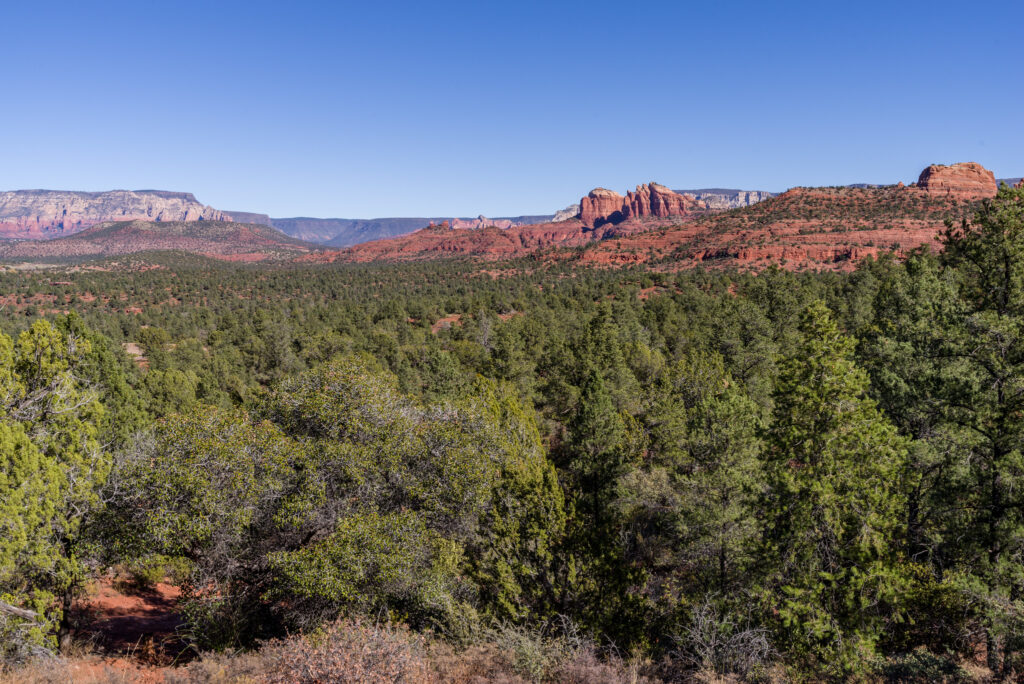
New Report Compiles Knowledge on Climate Resilience of Pinyon-Juniper Woodlands
This article was originally published in the Bureau of Land Management’s internal…
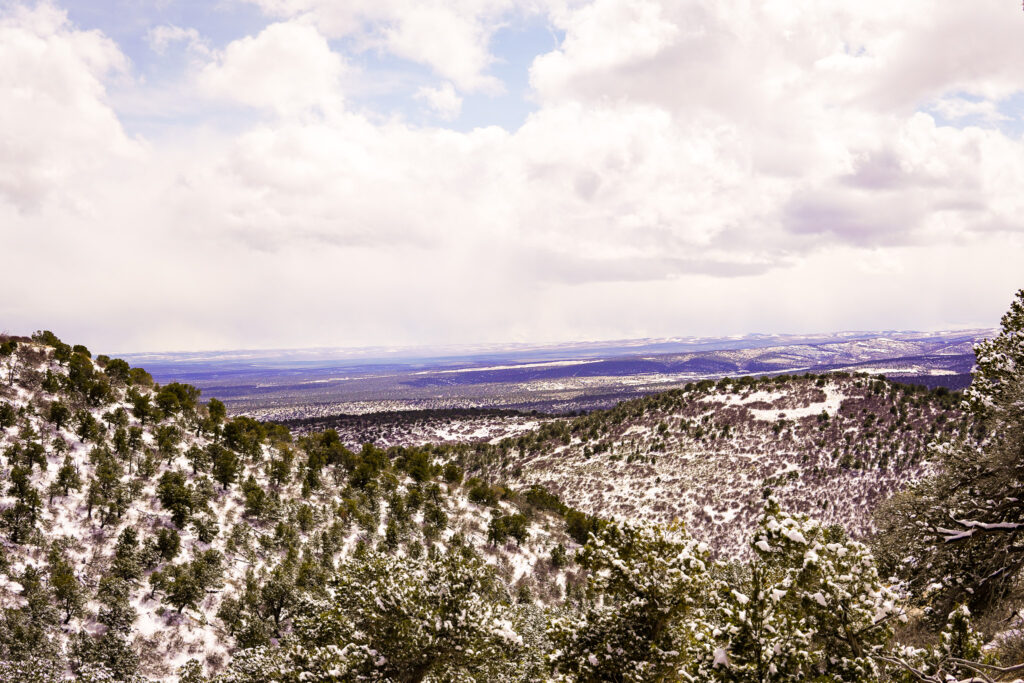
At the Woodland’s Edge: Restoration and Complexity in Colorado’s Piceance Basin
At the Woodland’s Edge:Restoration and Complexity in Colorado’s Piceance Basin Between two…
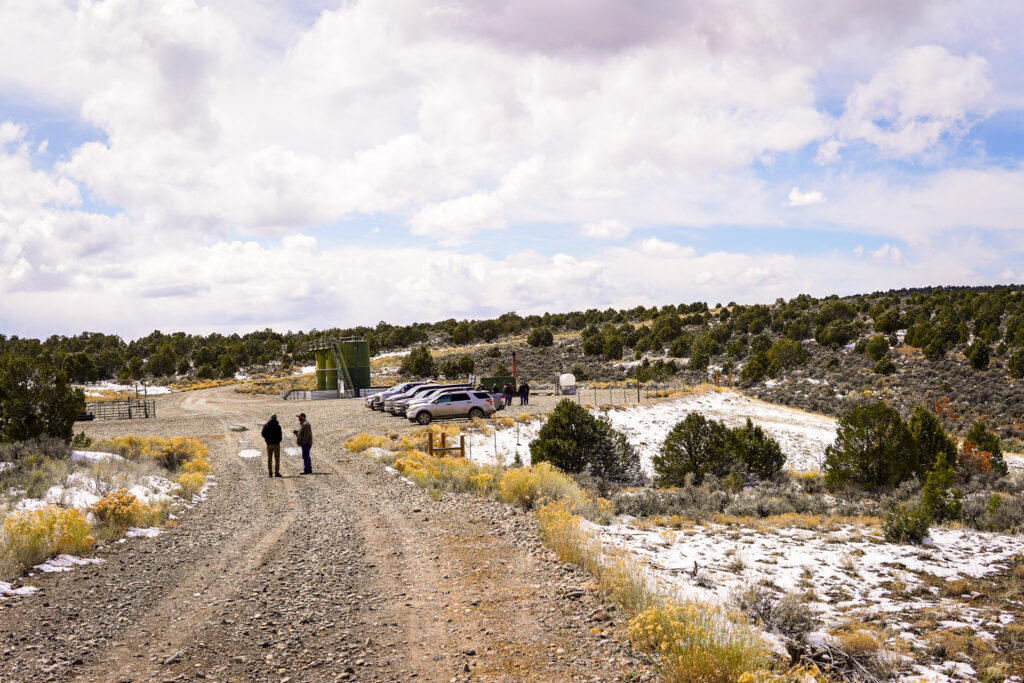
BLM and IWJV Workshop Woodland Management in Colorado
In early April, staff from the Intermountain West Joint Venture (IWJV) hosted…