How Changing Landscapes Drive Mule Deer Declines—And What We Can Do About It
In the journal Ecological Applications, a recently published paper looks at mule deer population trends in Wyoming. Called “Integrating climate and anthropogenic dynamics can inform multifaceted management for declining mule deer populations,” a few of the paper’s co-authors answered questions about their findings.
Across the West, life depends on working landscapes. The conditions that support healthy habitat—intact shrublands, productive agriculture, resilient forests, and reliable water—also support wildlife and sustain ranching, farming, and outdoor traditions like hunting and recreation. Understanding how these shared landscapes are changing can inform conservation decisions and actions that benefit people and wildlife.
Although mule deer often migrate long distances, they also tend to return to the same seasonal ranges year after year and have limited ability to quickly shift their behavior. As a result, landscape-scale changes — such as energy development, prolonged drought, and large wildfires — can have lasting impacts on populations. Because these pressures vary widely across regions and affect animals in different ways, it can be difficult to know which factors matter most and where local actions are likely to make a real difference. This study tackles that challenge by examining how long-term climate patterns and land cover changes affect mule deer recruitment, while also evaluating management actions that are within reach, such as habitat treatments and restoration projects.
Researchers found that using a structured decision-making approach across an entire state can help managers move from one-size-fits-all solutions to a range of possible actions. Long-term monitoring across large landscapes makes it possible to see how multiple changes unfold together and how local actions perform within those broader constraints. While this work focuses on mule deer, its lessons extend beyond a single species. The findings reinforce the value of integrated, landscape-scale conservation that supports resilient habitats, working lands, and wildlife populations in a changing West.
Q. If you were to sit down with your grandma and she asked what you’ve been working on lately, how would you summarize this paper?
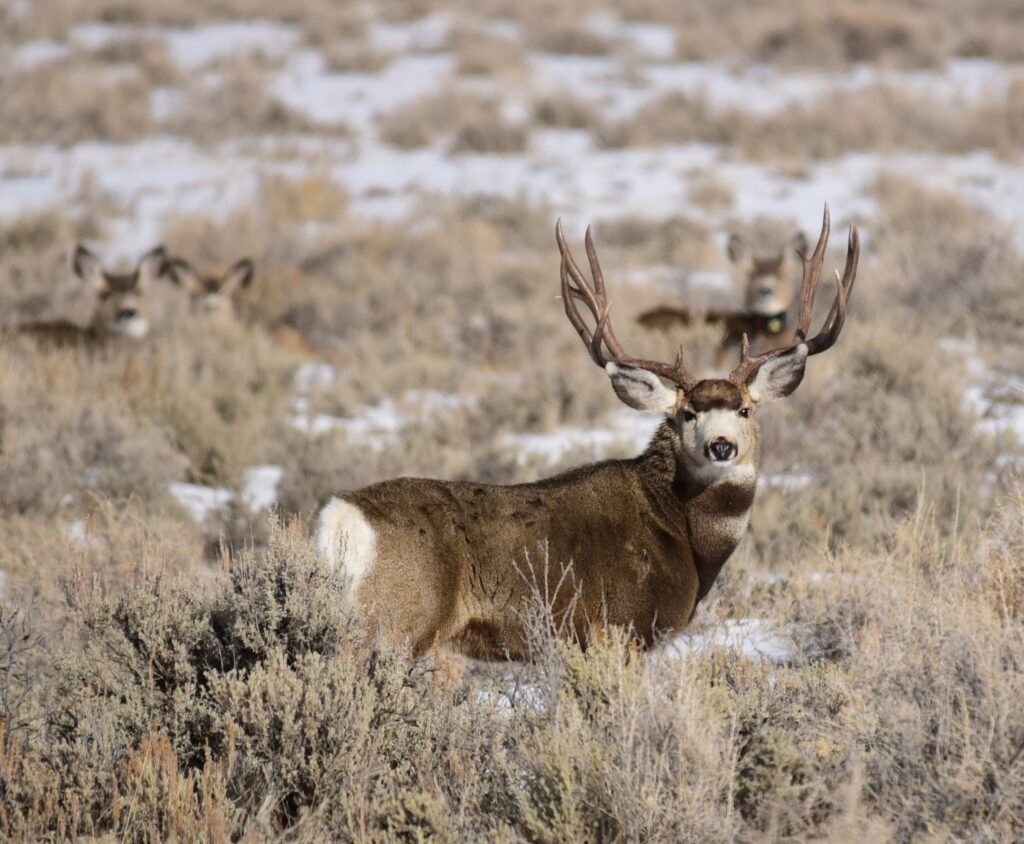
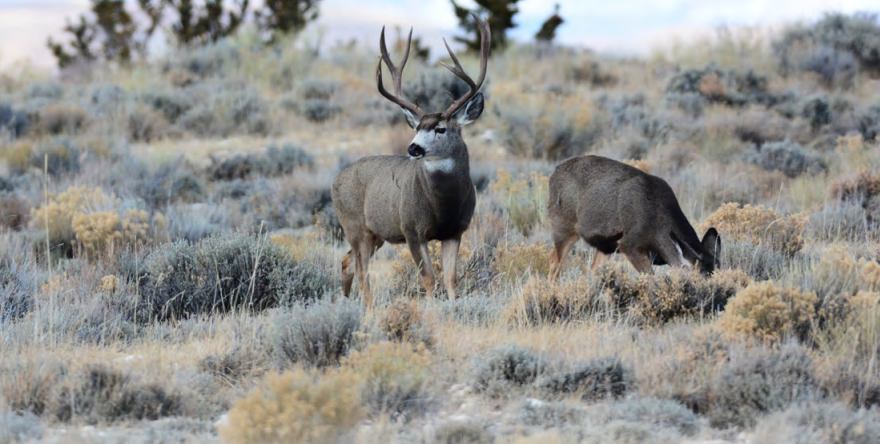
Mule deer numbers are going down across the western United States, including much of Wyoming. To try to understand why, we pulled together 40 years of previously available data on dozens of mule deer herds in Wyoming to look at how things like weather, habitat, and human activity influenced how many fawns survive each year.
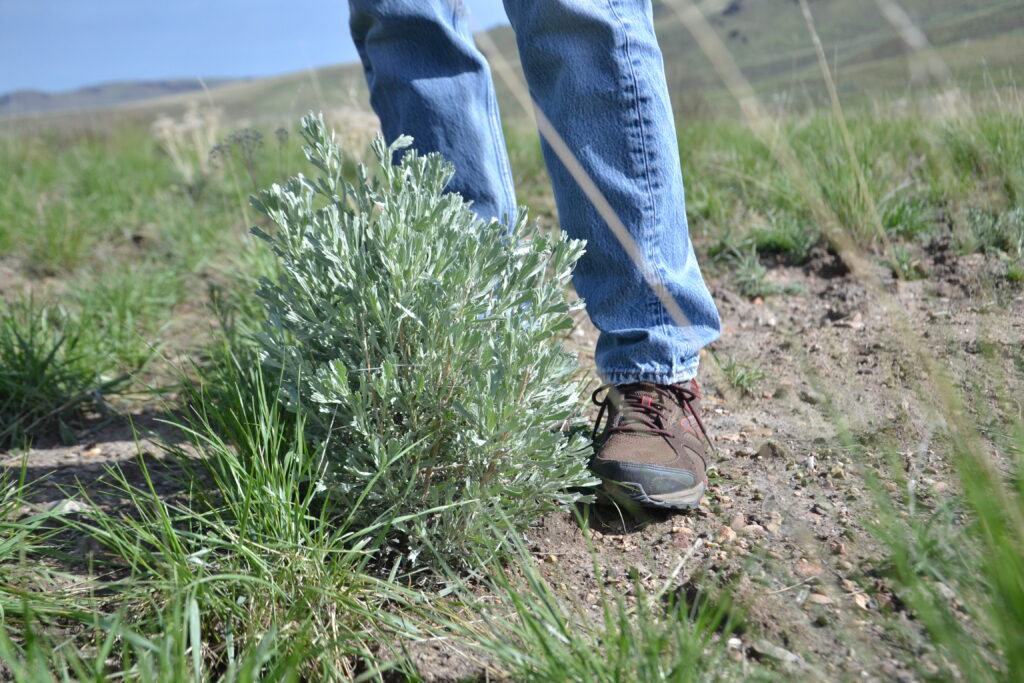
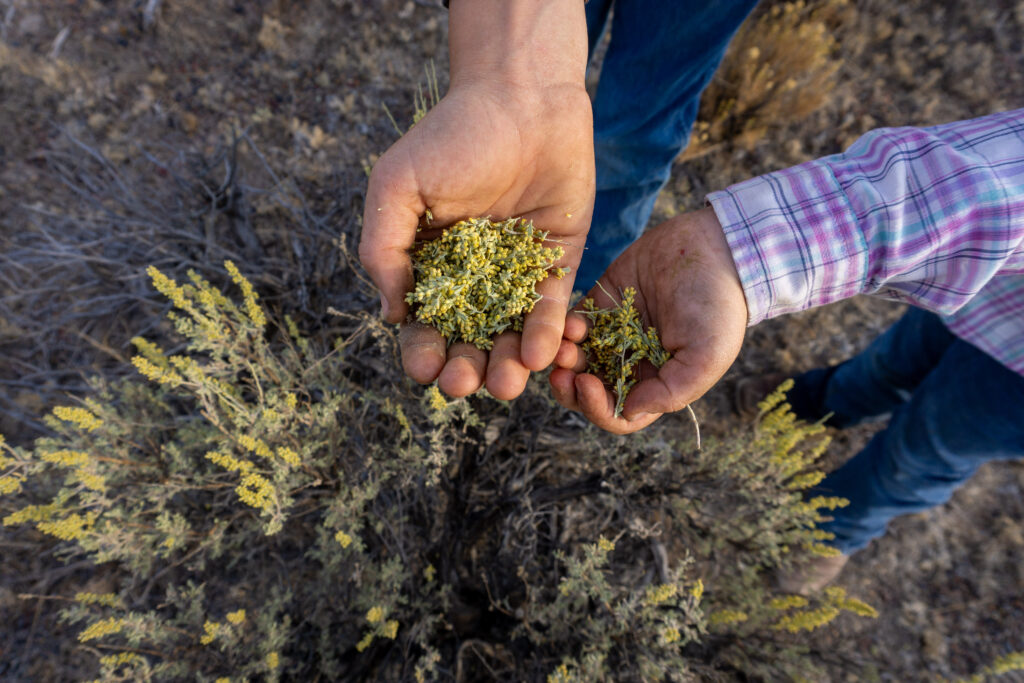
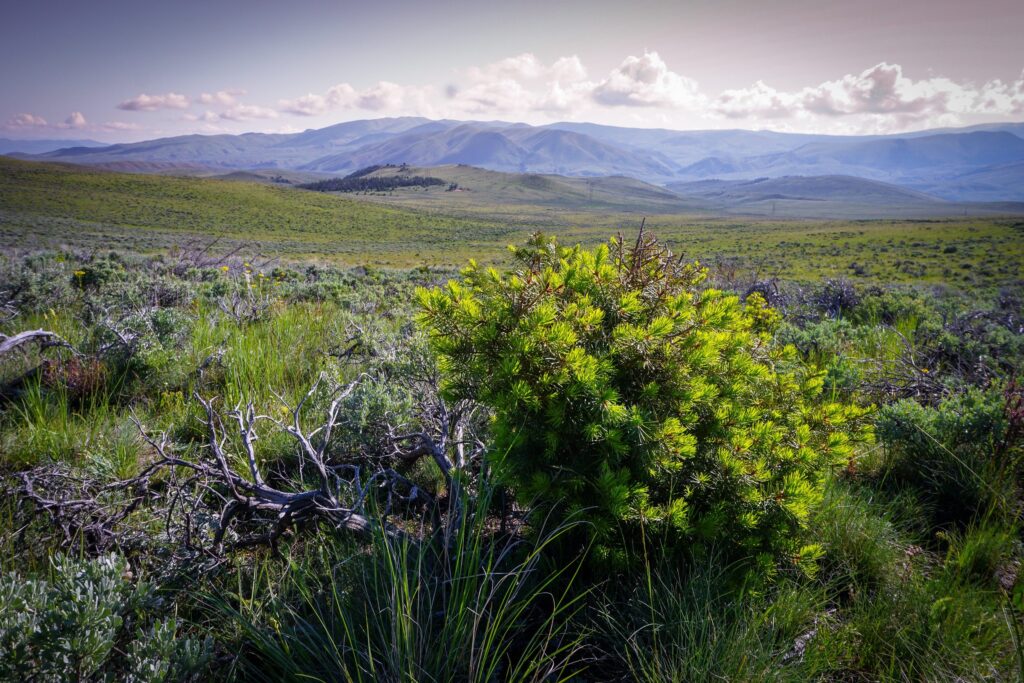
What we found is that some of the biggest forces affecting deer—such as drought and rising temperatures—are things that no individual land manager can control. However, we also observed that certain types of habitats, particularly healthy shrublands and agricultural areas, continue to have a significant positive impact on deer survival. These places are also important for lots of other wildlife species, such as sage grouse. Overall, even though we can’t change the weather, we can help mule deer populations with strategic planning for protecting important habitat as well as where we place new human infrastructure on the landscape, like energy developments.
– Teagan Hayes, Science to Implementation Specialist, Intermountain West Joint Venture
Q: How do you hope the information in this study is used?
I hope that this gives managers more knowledge to evaluate the best use of their conservation dollars when it comes to restoration. Although a lot of change is happening that is outside the control of biologists, this study could help biologists focus on shifts that are greatest and most detrimental. For example, our results suggest that management to reduce the effects of drought and buffer deer from severe winters may lead to better fawn survival when those conditions occur. Additionally, I hope that the planned report helps managers understand which stressors have changed the most in their areas.
– Tabitha Graves, Supervisory Research Ecologist, U.S. Geological Survey
Q. What new information does this paper provide land managers?
This manuscript provides an innovative strategy, utilizing existing data, to predict and understand potential consequences of new and ongoing land management activities. Key factors that inform land management decisions are often unpredictable and are driven by things like extended drought, extreme weather events, invasive species, and other uncertainties. This study provides a new way of thinking about these complex influences to provide a new and perhaps more predictable outcomes for big game populations.
– Chris Keefe, Wildlife Program Lead, Colorado State Office, Bureau of Land Management
Q. What would a hunter find interesting in your findings?
Hunters want more mule deer and these results list specific agents that are negatively impacting populations. The Wyoming Game and Fish Department can influence some of these things, but not all. For example, sportspersons and the general public can work with local elected officials to request wildlife-friendly choices, including those that are made at the county level, such as planning and zoning decisions. So many of the significant drivers on mule deer populations are not influenced by wildlife management agencies. Hunting seasons are not the most important factor for population changes, even though that is what many people focus on trying to influence. Habitat fragmentation (from many different causal agents) and climate (drought and severe winters) are far more impactful.
– Jill Randall, Big Game Migration Coordinator, Wyoming Game & Fish Department
Q. Facts don’t often change minds, but the way people feel can change how they think about something. What do you want people to feel after learning about this study?
My hope is that this information evokes a sense of empowerment and motivation in readers, enabling them to understand the issues they can be involved in and how they can help reverse negative drivers affecting populations. We can’t do everything on every piece of land. There are trade-offs if we want to prioritize mule deer habitat and populations. Armed with good information, I hope that readers can support land managers, land owners, stakeholders, and decision makers to make the best decisions that we can for mule deer.
– Embere Hall, Science, Research & Analytical Support Unit Supervisor, Wyoming Game & Fish Department
To read the full study inEcological Applications, click here for the open access publication.